Nutrition
Changing pet food? Take it slowly
PetTouch ·
A gentle food-change plan, with signs to slow down or call your vet.
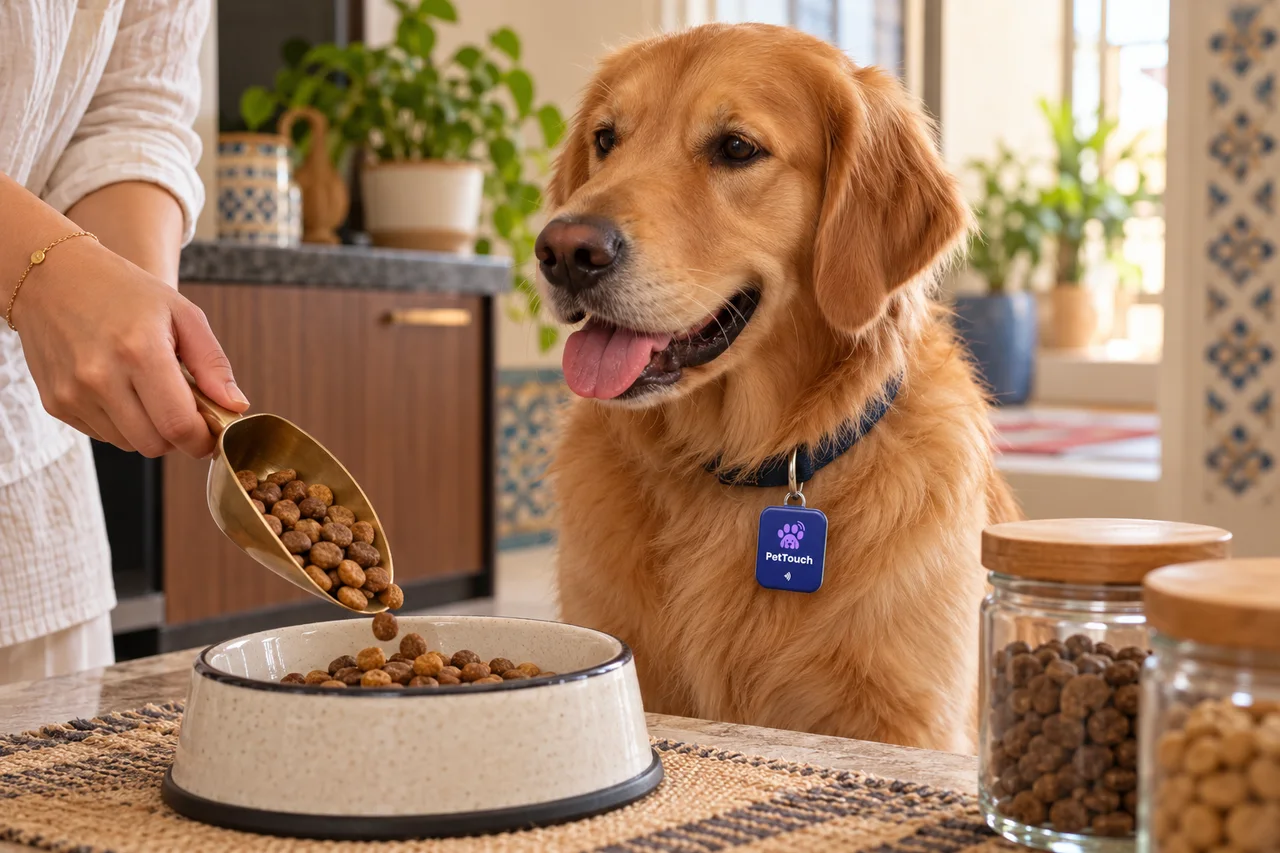
Is the old bag nearly empty? If possible, start the change while some is still left. A sudden switch can upset digestion or make a pet refuse the new food.
A sample plan for a healthy adult dog
- Days 1–2: roughly three parts old food to one part new.
- Days 3–4: equal amounts of each.
- Days 5–6: one part old food to three parts new.
- Day 7 onwards: all new food, if appetite and digestion are normal.
Use the plan flexibly
These are proportions of a meal, not extra food. If the calorie content differs, check the portions with your vet. Some pets need longer. Cats may need two weeks or more to accept a change; never withhold food to force a cat to eat something new.
Watch your pet
Keep an eye on appetite, stools, vomiting and energy. Slow down for mild soft stools, and ask your vet if they persist. Repeated vomiting, severe diarrhoea, blood, unusual tiredness or refusing food need prompt veterinary advice. Be especially careful with cats, young pets and animals already unwell.
Follow a treatment plan
If the change is for illness or a suspected food allergy, follow your vet's instructions instead of this example. Avoid changing several things at once, and note the food name and amount so you can review the result together.