Safety
Lost pet? A calm plan for the first hours
PetTouch ·
Search nearby, share useful details safely and understand what an ID tag can do.
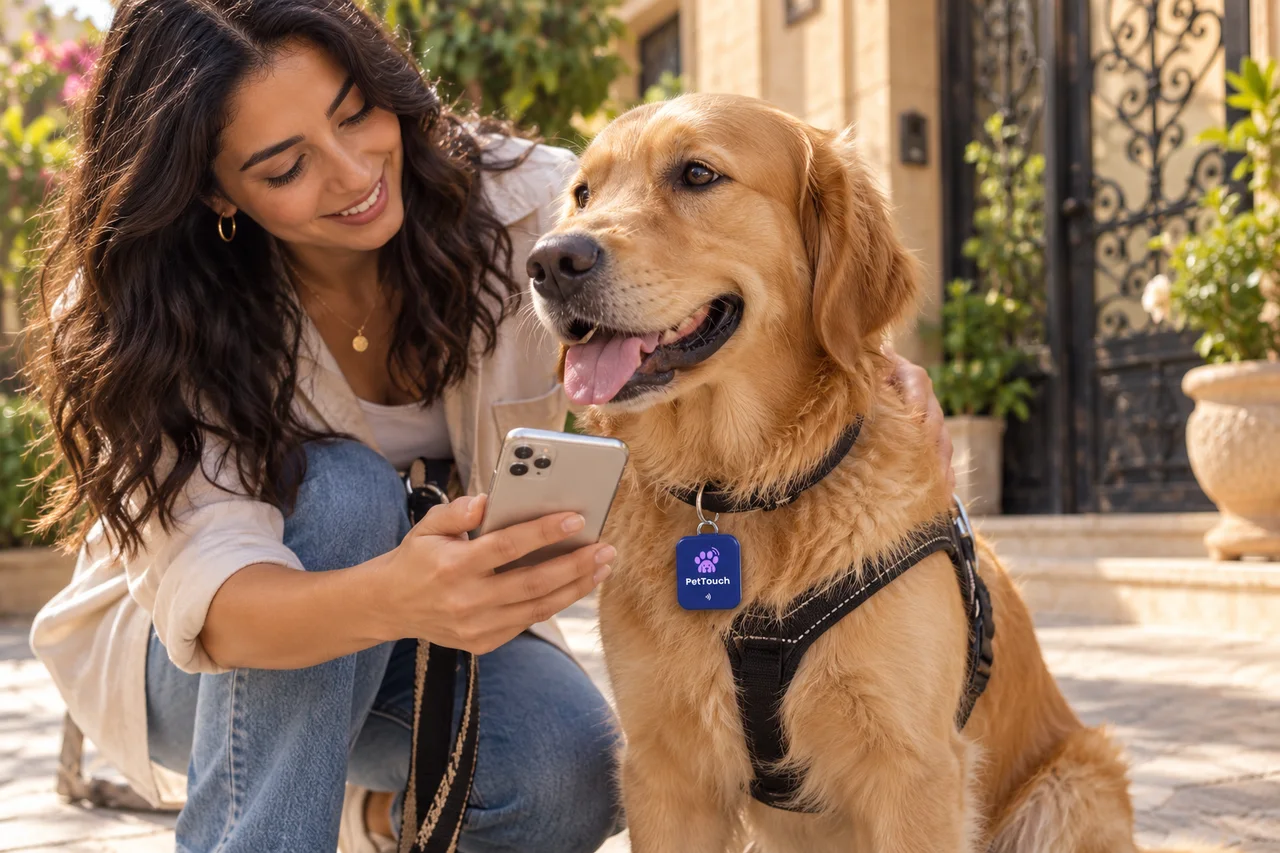
The first few minutes can feel overwhelming. Take a breath and ask someone you trust to help. One person can search nearby while another prepares a clear missing-pet notice.
Start close to home
Check rooms, stairwells, garages and closed spaces calmly. Cats can hide in surprisingly small places. Return to the last confirmed sighting and ask neighbours, building staff and nearby shops to check storage areas, not just the street.
Do not turn a sighting into a chase
A frightened animal may run from noise or a crowd. Avoid chasing or cornering them. Call calmly from a safe distance and get experienced help near roads or other hazards. Quieter times may help a missing cat respond, but start searching and reporting promptly.
Share useful details safely
Use a recent clear photo, the area, time and place last seen, collar details, a distinguishing feature and a suitable contact method. Alert local vets and rescuers, and post in neighbourhood groups and PetTouch community reports. Keep your precise home address private. Verify claims carefully before paying anyone who says they found your pet.
An ID tag is not GPS
Check that the contact number and pet page are current. A PetTouch tag helps a finder open the page by tap or QR scan; it does not automatically track a pet or guarantee recovery. If your pet has a microchip, alert the relevant registry and update your details. Close notices once your pet is safely home.