Safety
Safer windows and balconies for your cat
PetTouch ·
Check barriers and gaps before opening a window or allowing balcony access.
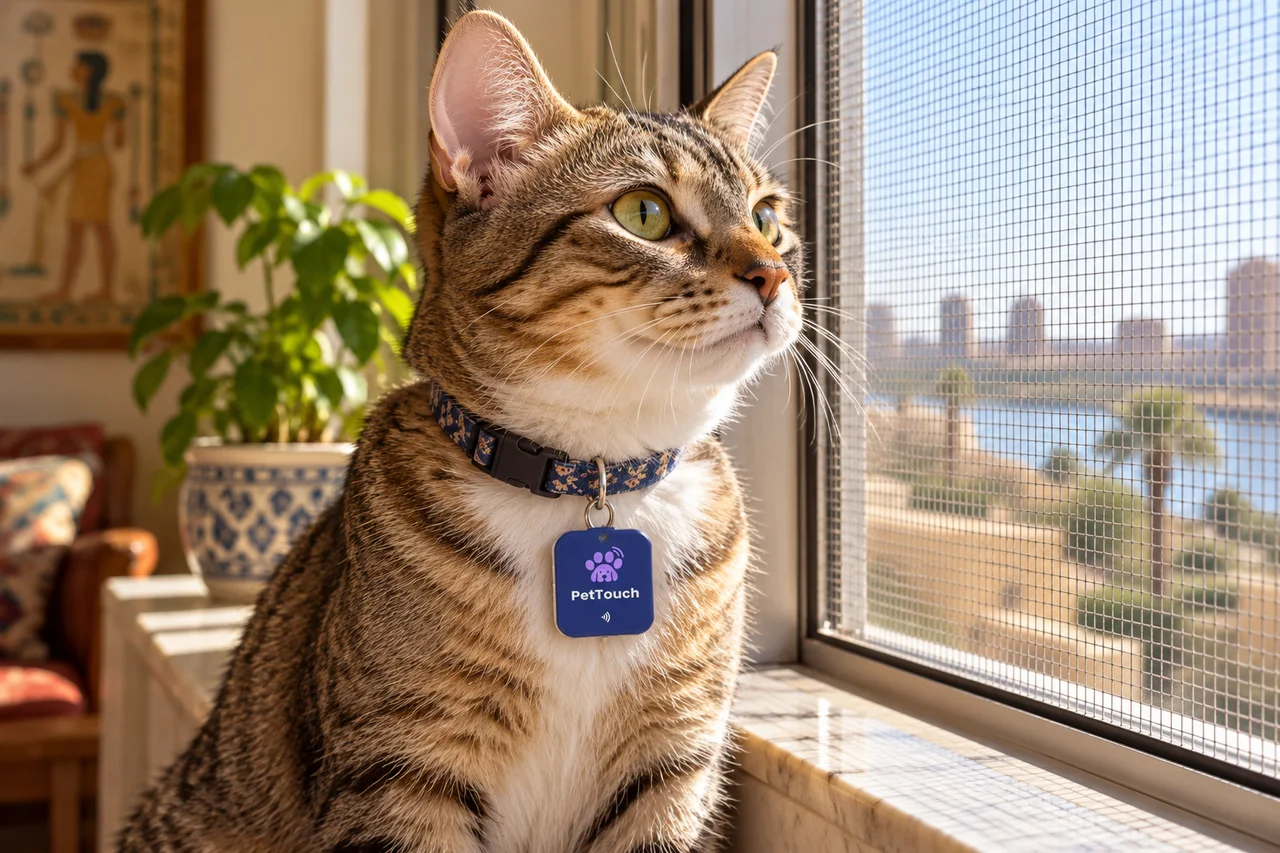
Good balance does not make a cat fall-proof. A bird or sudden noise can trigger an unexpected movement, even in a cat used to the window.
Choose a proper barrier
Do not rely on a light insect screen or a partly open window. Use a securely fitted barrier designed to contain cats, and check frames, corners and gaps. Balcony protection needs to prevent escape above, below and at the sides. Get suitable installation advice rather than using loose netting that could entangle a cat.
Watch tilted windows
The V-shaped opening of a tilted window can trap a cat and cause serious injury. Close it when you cannot supervise, or fit purpose-made protection. Check doors when guests or workers visit, and agree who will make sure they close safely.
Offer an indoor alternative
A comfortable perch behind a secured window, play, scratching areas and resting spots can make indoor life more interesting. Even a protected balcony needs supervision. Restrict access if your cat tries to climb or force the barrier. A collar and ID tag identify your cat; they are not a restraint or fall-prevention system.
After a fall
Contact an emergency vet promptly, even if your cat gets up and walks. Breathing trouble or pain is especially urgent. Minimise unnecessary handling and follow the clinic's transport instructions. Check your windows today rather than waiting for a frightening accident.