Training
Help your cat feel comfortable in a carrier
PetTouch ·
Make the carrier familiar with small steps, rather than bringing it out only for vet visits.
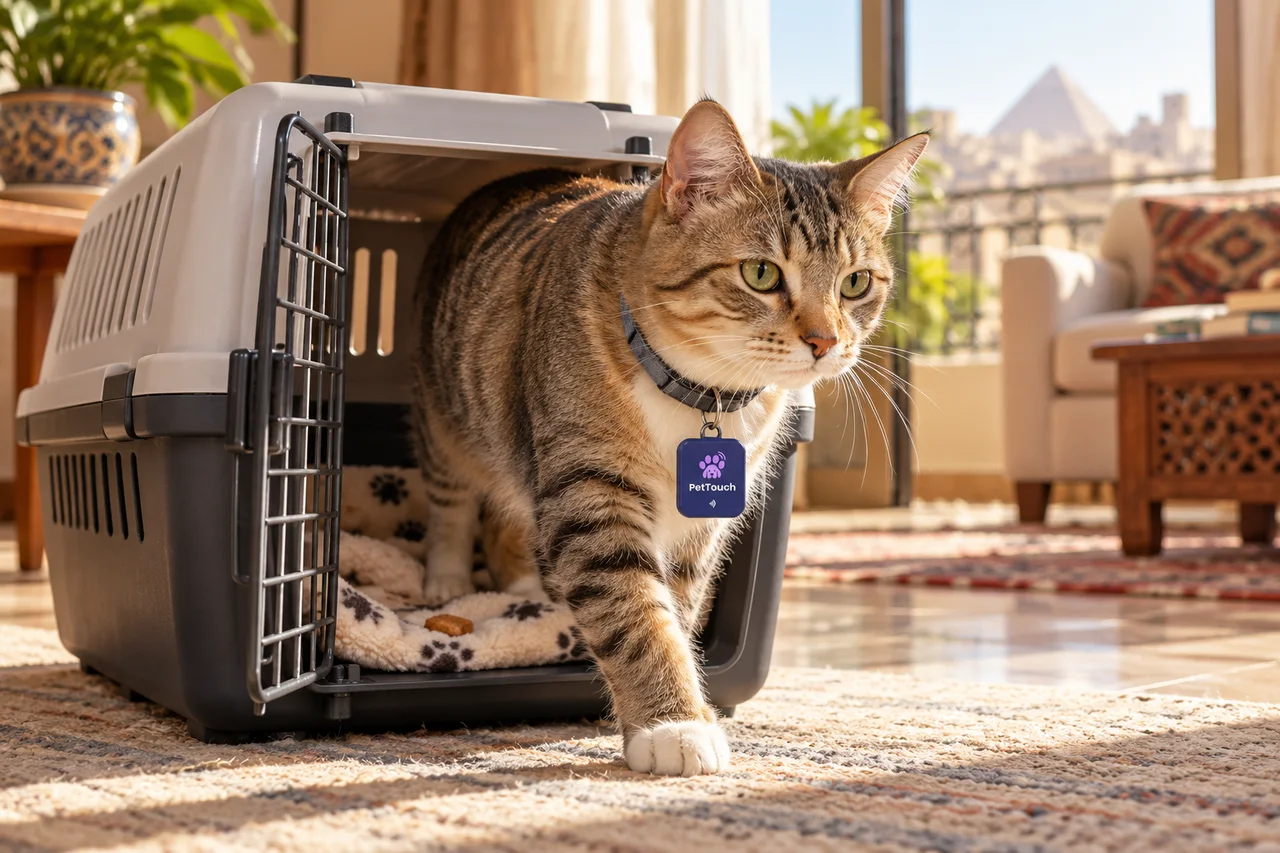
If the carrier only appears before a vet visit, your cat may learn to worry about it. Practise on quiet days, well before you need to leave.
Make it familiar
Choose a sturdy, well-ventilated carrier with room to stand, turn and rest. Leave it open in a quiet part of the home with familiar bedding. At first, simply approaching or sniffing it is progress.
Let your cat set the pace
Offer a suitable treat near the entrance, then gradually inside. Once your cat enters willingly and looks relaxed, close the door for a few seconds and reopen before they become worried. Build up slowly, then practise a gentle lift and a short carry indoors. Go back a step if they become uneasy.
On travel day
Check the latch and support the carrier underneath to reduce swinging. A light cover may help, but keep ventilation clear. In a car, keep your cat inside a closed carrier secured safely for its design. A loose cat can be injured or distract the driver.
Avoid a battle
Do not chase your cat or tip them out. For severe fear, ask your vet for a plan before the appointment. Never use a human sedative or an old medicine dose without veterinary instructions. The aim is safer, calmer travel, not forced endurance.