Grooming
Brush your cat gently, without a battle
PetTouch ·
Short, comfortable brushing sessions and safe next steps for tangled fur.
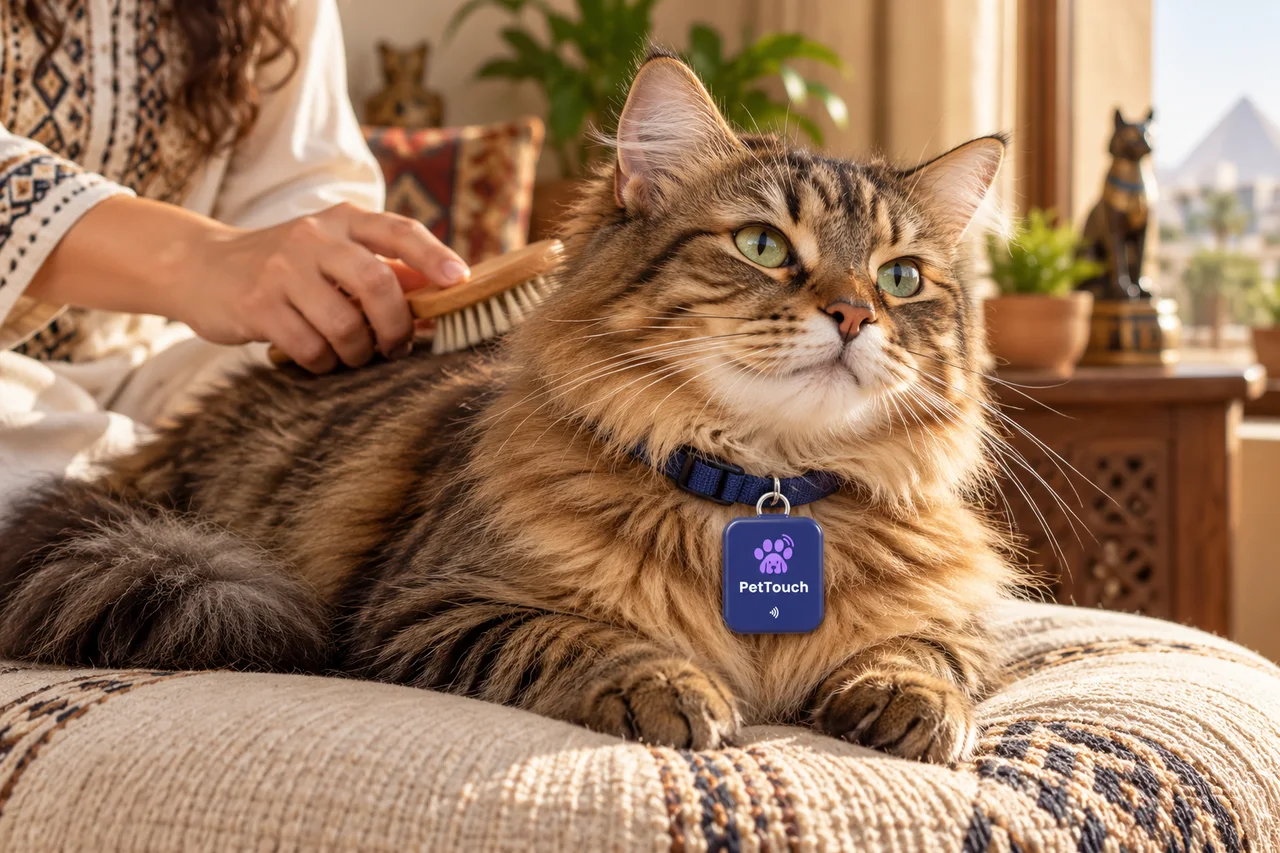
Cats clean themselves, but some still need help with their coats. Brushing removes loose hair and gives you a chance to notice tangles or skin changes.
Start with a tiny session
Choose a calm moment and let your cat investigate the brush. Try a few gentle strokes on an area they already enjoy being touched. Follow with a suitable reward or a break. You do not need to finish the whole coat at once. Stop if your cat turns their ears back, lashes their tail or tries to leave.
Match the coat
Use a brush or comb suited to the fur, and work gently in its direction. Long coats often need daily attention to prevent tangles; shorter coats need a routine that fits the individual cat. A vet or experienced groomer can help you choose a comfortable tool.
Do not cut tight mats
Never pull hard on a knot or cut a mat close to the skin with scissors. Thin skin can be caught inside the tangled fur. Ask a vet or qualified groomer for help, especially when mats are painful or extensive. Avoid trying oils or other products without advice.
Know when to get help
Bald patches, wounds, strong itching or a cat that stops grooming deserve a veterinary check. After brushing, check the skin beneath the collar too. A cat's collar should be quick-release, and any attached ID tag should be light and appropriately sized.